5/12/2025
Sheet piles, vibrator hammer and anchor rods: How 430 meters of new quay become reality

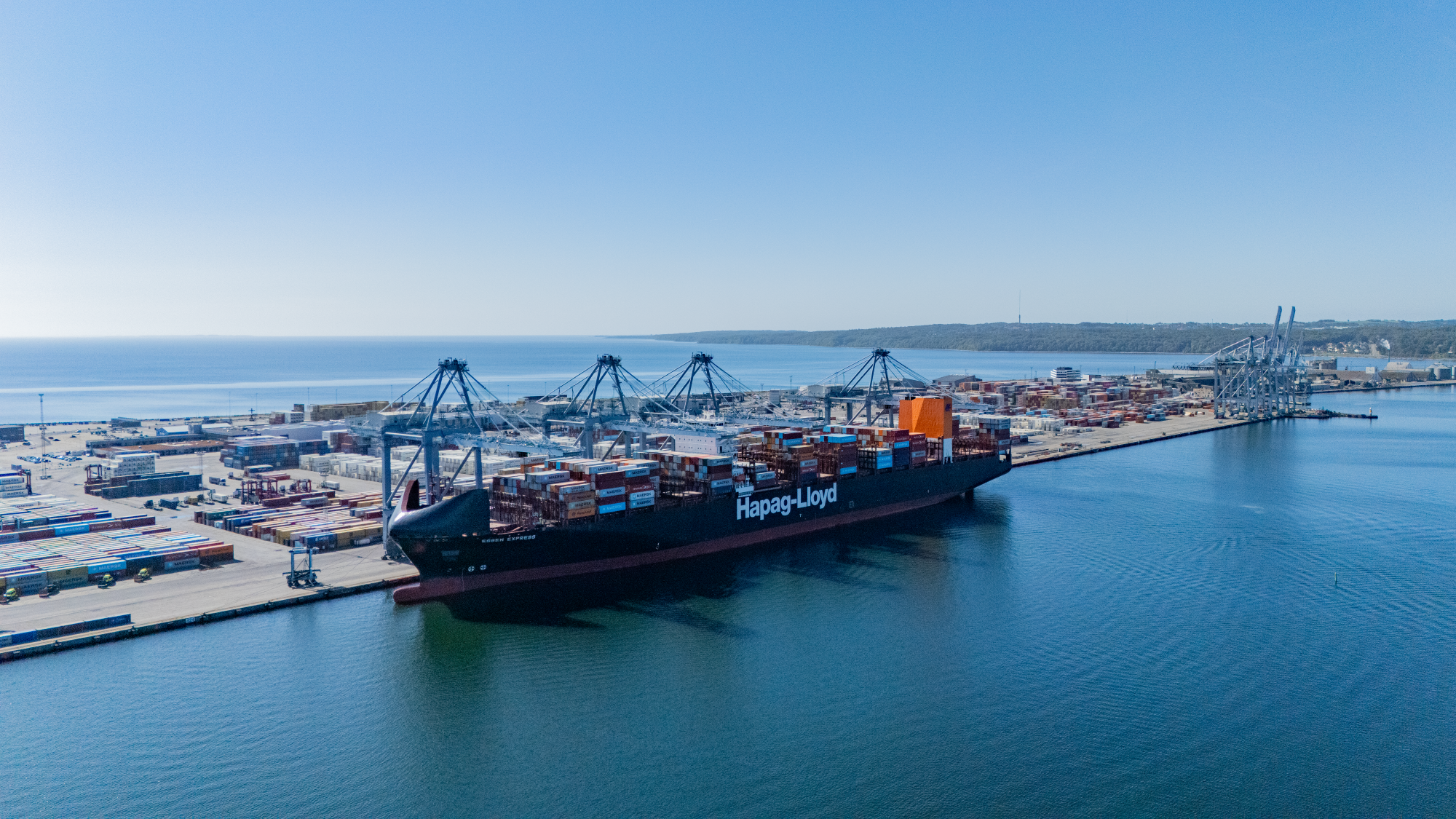
It is not every day that new port areais established. In fact, this has not happened in Aarhus since the first stage of the Omniterminalen was completed in 2018.
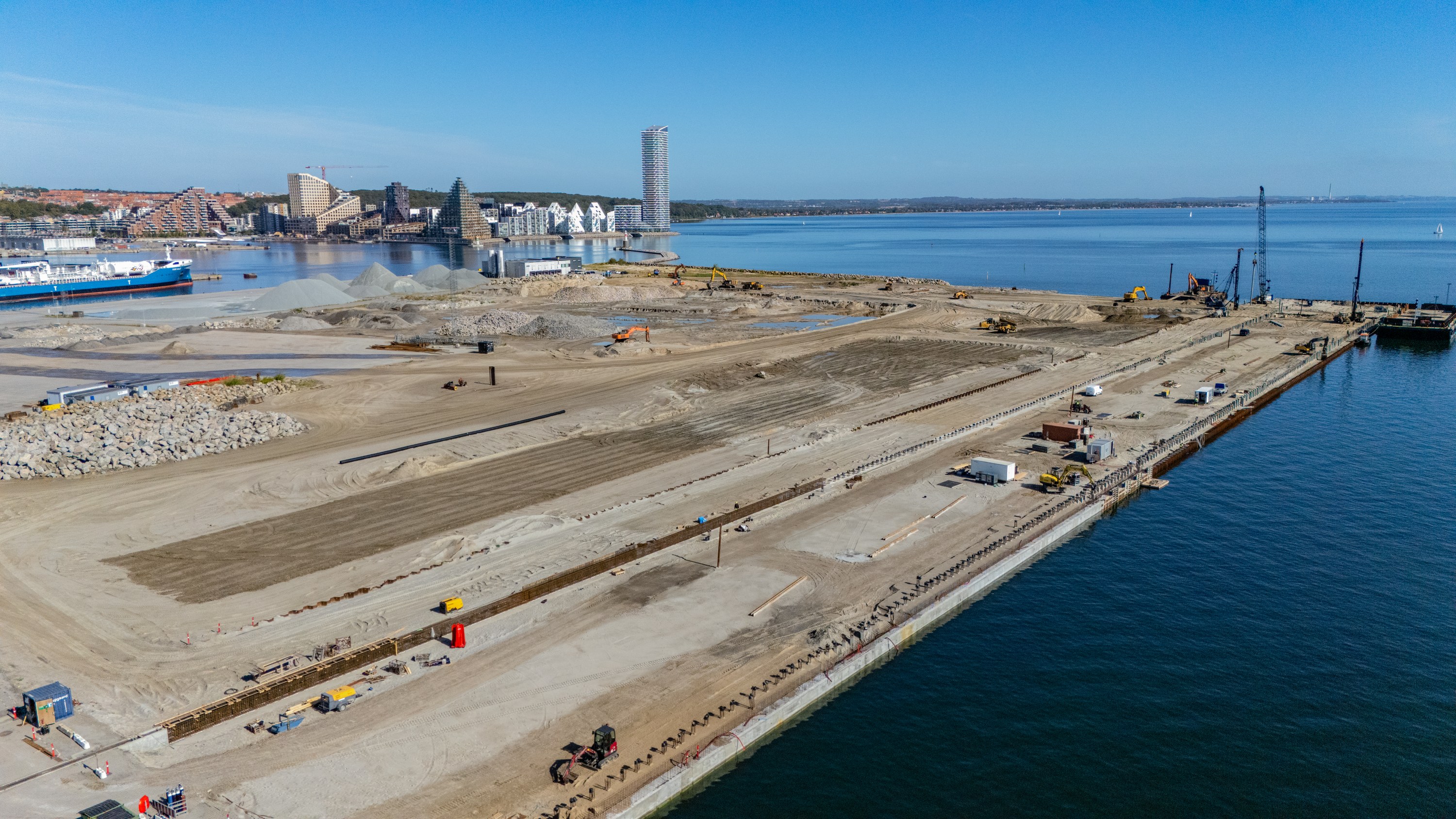
Therefore, the current work to complete the Omniterminalen with 430 meters of new quay with a water depth of 14 meters is also a historical milestone for Denmark's largest commercial port.
But establishing a new quay area out of an open port basin is not something you just do. In this article, you will therefore learn more about how we, together with MT Højgaard Denmark, establish 430 meters of new quay and complete approximately 180,000 square meters of new port area.
Less noise and millimeter work
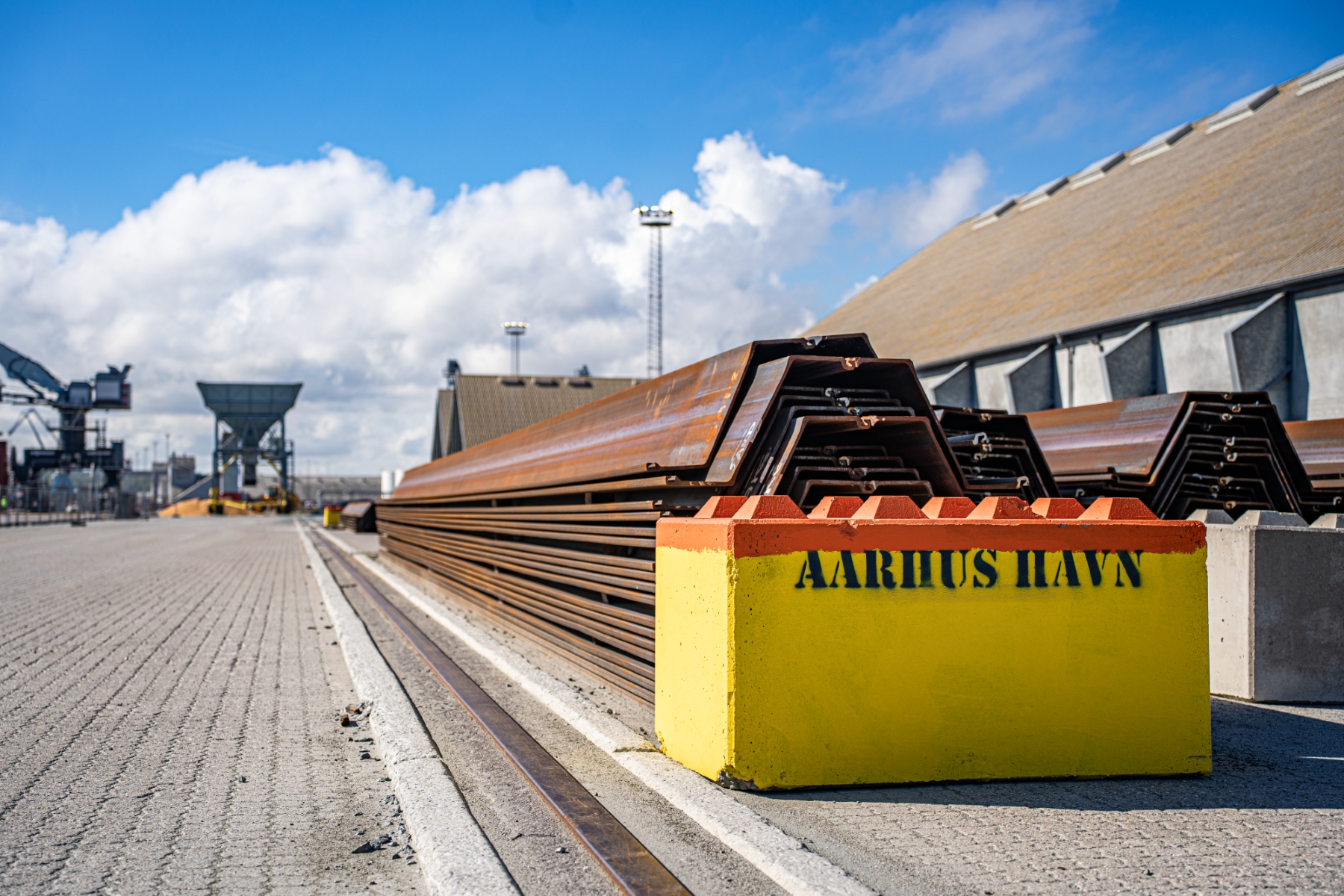
The 430-metre quay frame is formed by a steel frame with approximately 900 metres of sheet piles — up to 31 metres high and tonne-heavy steel plates. A work that is well under way right now.
They are vibrated down by a vibrator hammer or rammed down with a ramming machine, which stands on a working platform out in the water, a jackup. The jackup has long legs so that it can stand on the seabed and stand stable, because the sheet piles must be vibrated millimeter-precise over 15 meters into the seabed.
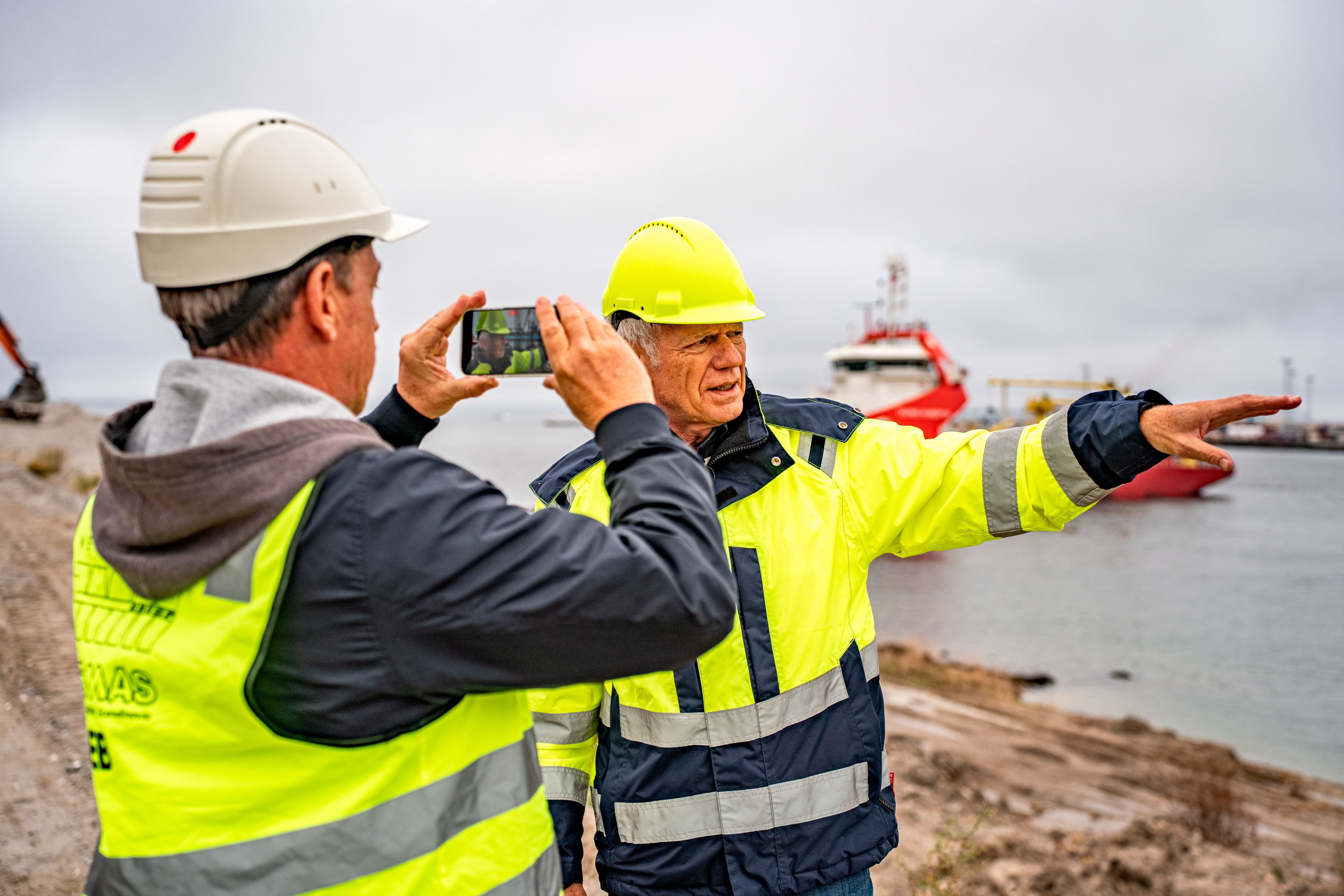
- We are pleased that most of the sheet piles can be vibrated into place rather than driven in. This method is less noisy, and it’s actually both faster and more cost-effective. You can’t always choose this method, but in this case, the seabed in the port basin allows it, says Kim Meilstrup, Senior Project Chief at the Port of Aarhus.
From sandpit to dock
Once the front spunwall and the anchor wall are established with the long sheet piles, anchor rods must be established between the two walls, while continuously filling sand down between the two walls, where until now there has been an open water area.
The anchor rods are 50 meters long steel rods that connect and maintain the front sheet pile wall with the anchor point. It should ensure that the quay wall is held in place.
After this, more sand will be filled on the new area, which used to be an open harbour basin, before work begins on the installation of large concrete piles. The piles will carry the upcoming crane rails on which the large container cranes will run.
The quay structure consists of multiple concrete structures, as the design has focused on reducing the consumption of concrete, without compromising the strength of the structure.
- We have achieved a design that allows us to use less concrete than we did when building the first stage of the Omniterminal. On the concrete side, this means we will emit less CO₂e per 100 meters of quay compared to the first stage and to traditional quay construction in general, says Kim Meilstrup.

Leased and future-proofed berthing area
Eventually the crane rails, bollards, fenders and various other items will be installed on the quay before MT Højgaard will hopefully hand over the finished quay area by the end of 2026.
But the new area isn’t finished yet. In early 2027, a new phase will begin with a separate contract to establish various types of paving as well as lighting for the new area.
Once completed, the area is more or less ready to be moved in by the new tenants, which are the world's largest container shipping company, MSC, and their container terminal operator, TiL. They have chosen to lease the area to invest in a brand new container terminal on the site.
- It’s a very robust structure we’re building. But that’s necessary because the container cranes alone weigh well over 1,000 tons. We’ve also chosen large and extremely durable fenders and bollards to ensure that, both now and in the future, we can accommodate the largest vessels of various types. We look forward to experience activity and new jobs unfold on the new quay, says Kim Meilstrup.